Project Updates
Detailed updates on the Annex Project are available in the PDFs below.

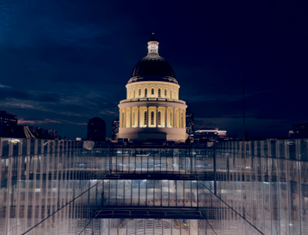
The Capitol Annex Project began with a vision to bring our state’s Capitol building into the 21st century. The space was built in 1952 as a much-needed upgrade to the nearly 100-year-old historic West Wing structure. That construction included major upgrades that provided residents with easier access to their lawmakers, public meeting rooms that accommodated the size and scale of the population, and state-of-the-art (for 1980’s standards) technology.
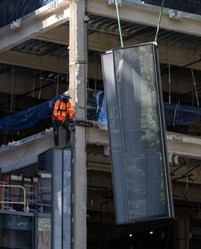 As California has continued to grow, so have the needs of the People’s House. We have once again reached a crossroad that demands another update to our state’s Capitol. Our previous space predates the safety and accessibility standards the state now holds itself to – ensuring all Californians can access their representatives. In addition, a comprehensive evaluation of the building found a number of deficiencies that compromise the operational efficiency needed now and for the future.
For these reasons, the state has begun building a new Capitol Annex that can best serve the over a million visitors each year. The new Annex will reflect California’s timeless pioneering spirit while embracing our innovative energy that defines our reputation as the fourth-largest economy in the world.
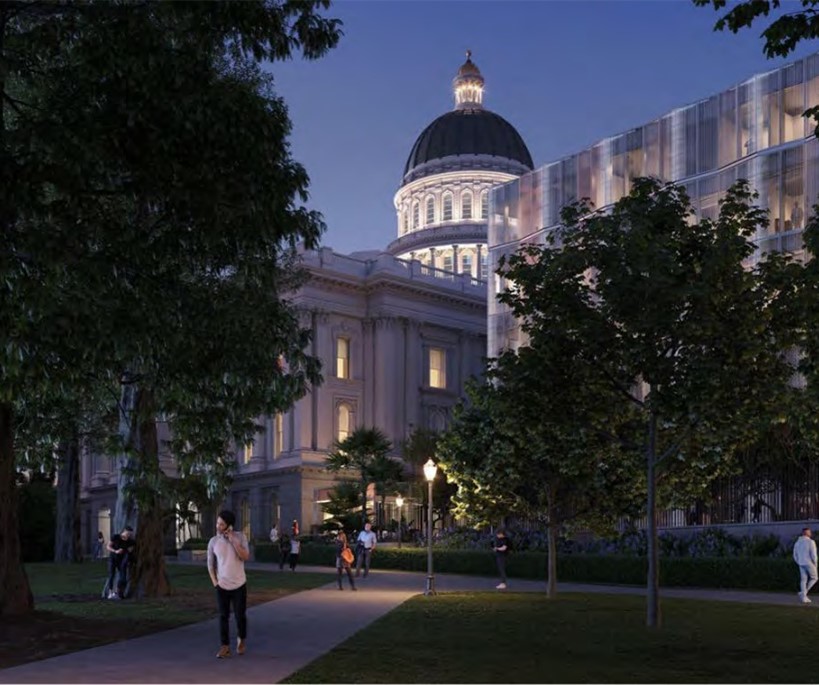
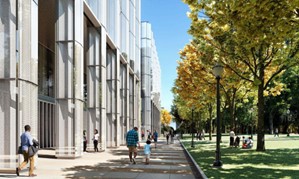
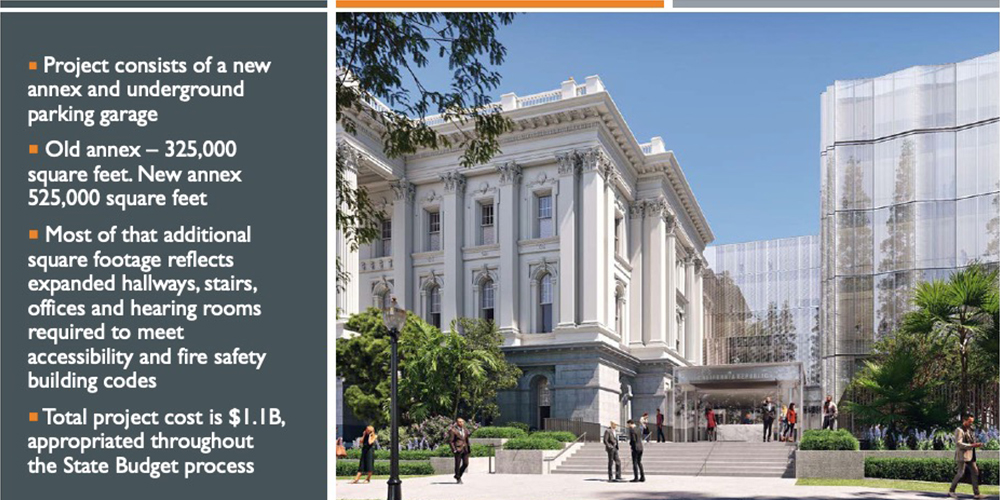
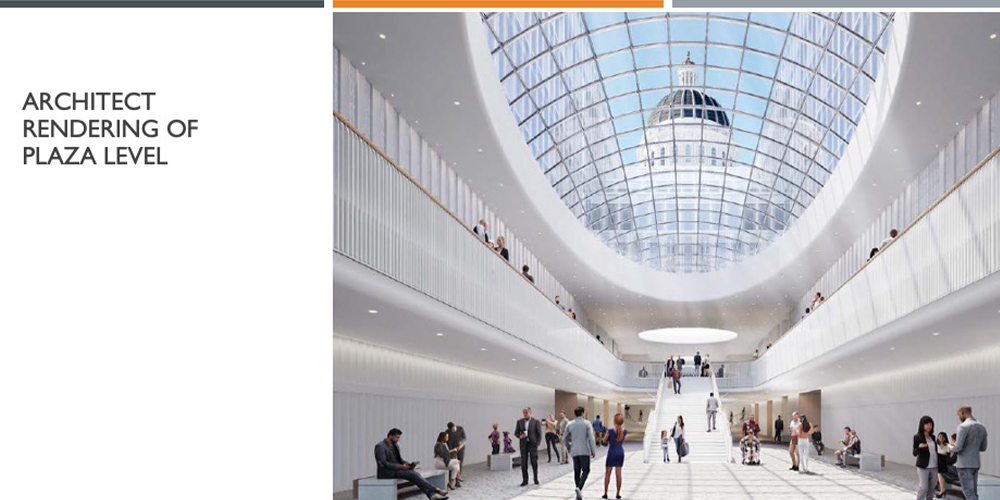
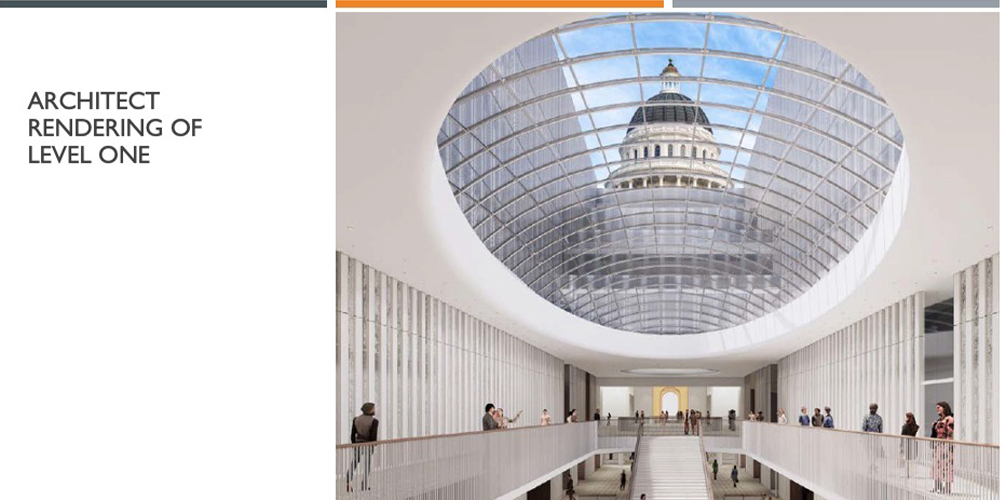
Architectural rendering of exposed historic Capitol windows and new Annex
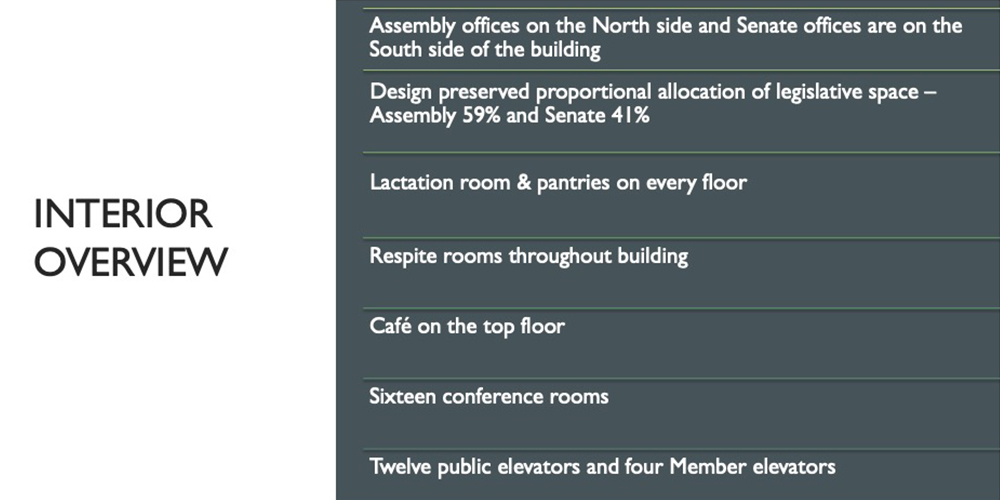
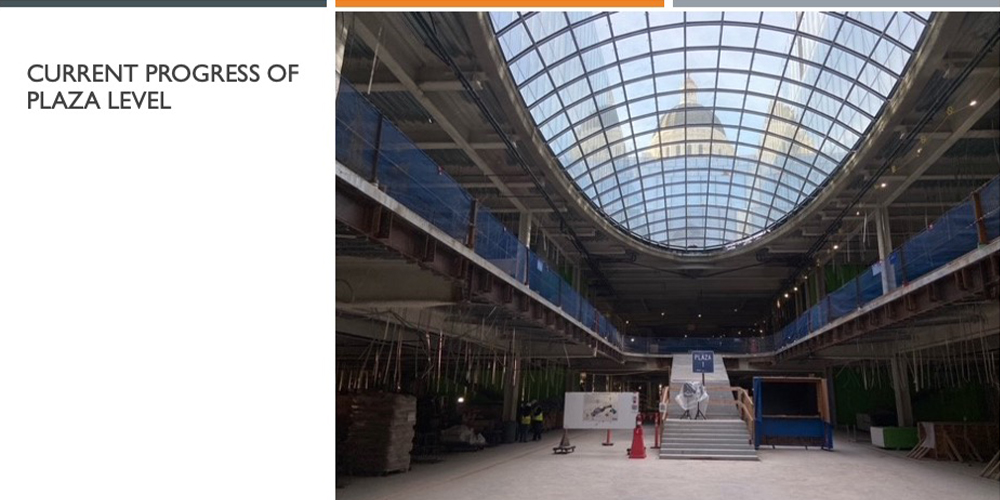
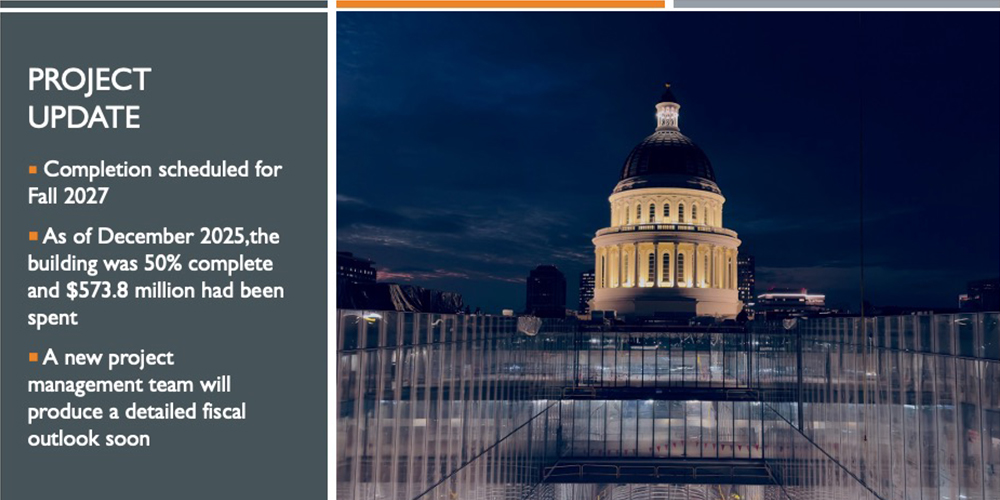
Since the project broke ground on March 2023, 55% of the project has been completed with $632 million spent of the $1.1 billion allocated by the California Legislature. The new building will feature lactation rooms on every floor, respite and restrooms throughout the building, a public café, 12 public elevators, and four Member elevators. The Annex in its entirety is expected to be completed by Fall of 2027.
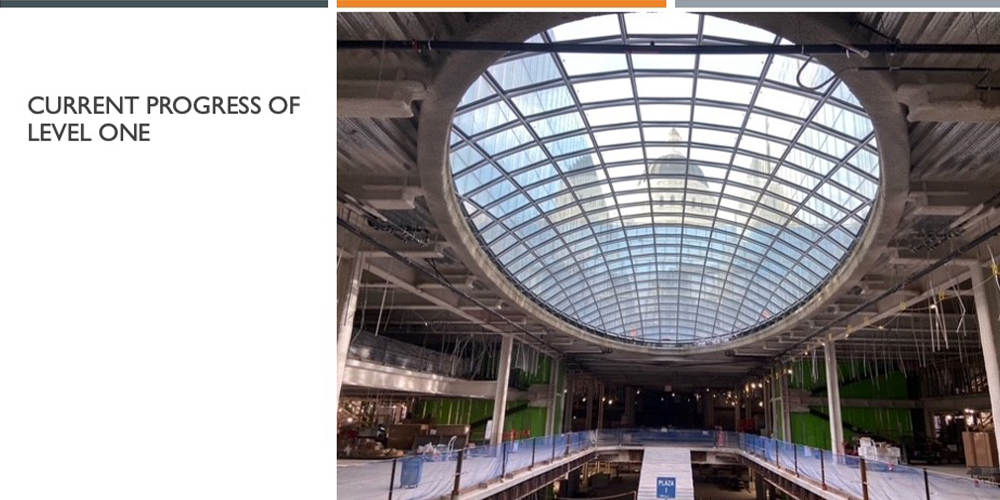
Over 350 California construction union workers are employed for the Annex Project. These important skilled laborers have helped to lay 21,045 cubic yards of concrete, 2,628 tons of steel for framing, and five stories of exterior high-performing glass.
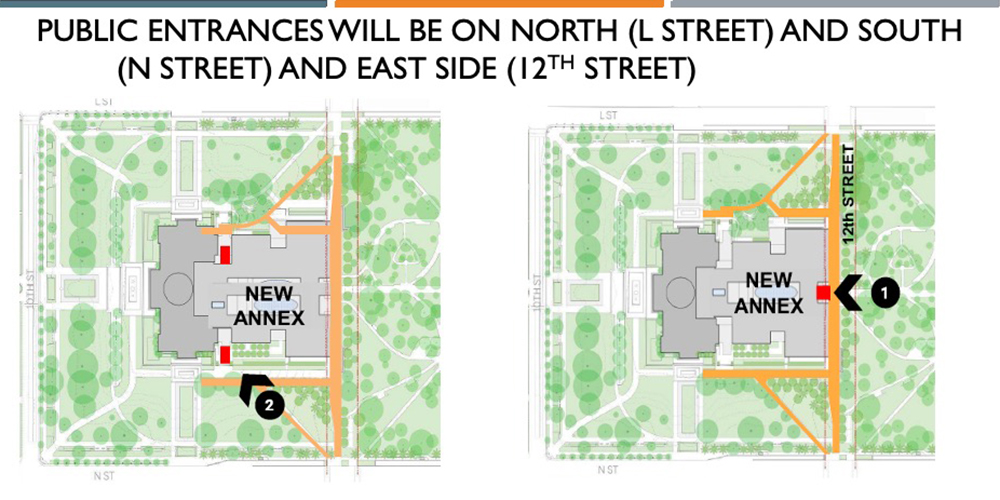
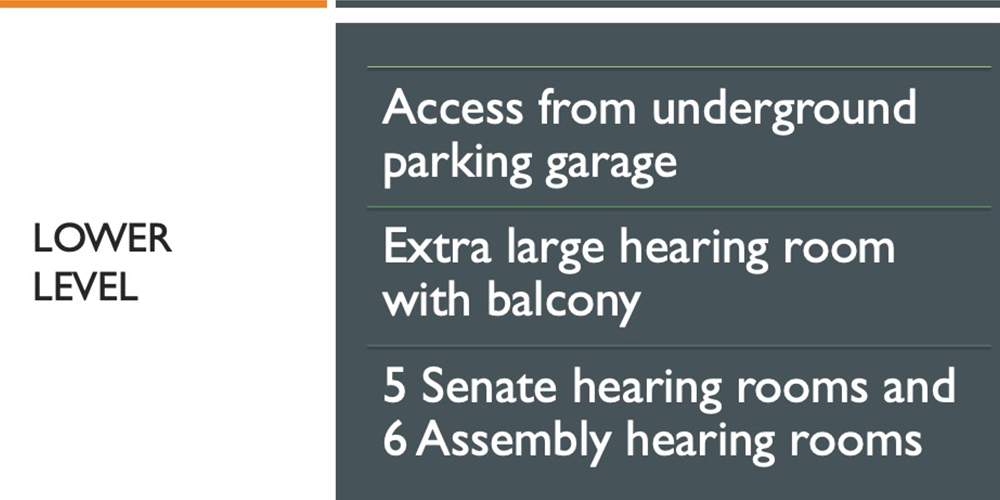
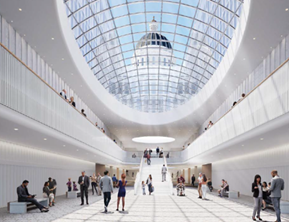 Public accessibility remains our top priority for this project. The Capitol building remains the People’s House, and making sure Californians have access to their elected officials is key to this renovation. That includes additional hearing rooms for constituents to view the legislative process, and more public space for large groups who come to the Capitol to learn, advocate, and have their voices heard. Democracy only works if the public is involved in the process, and that begins at the Capitol.
 The People’s House is currently the fifth-most visited tourist attraction in the state. That speaks to just how interested Californians are in participating and learning about our legislative process. Supporting that curiosity with a design that connects our legislators to the people ensures we keep our state’s Capitol standing strong.
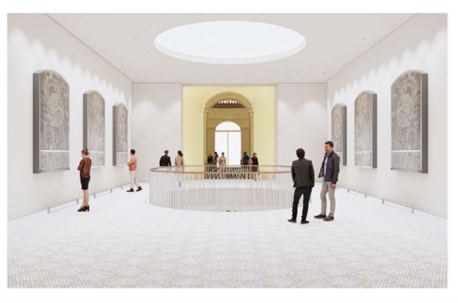
Architectural rendering of interior connection with Historic Capitol
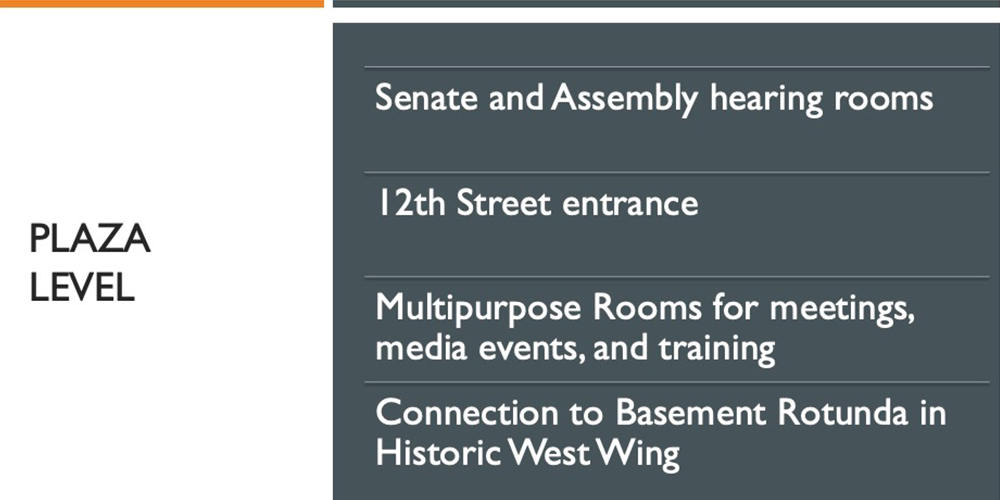
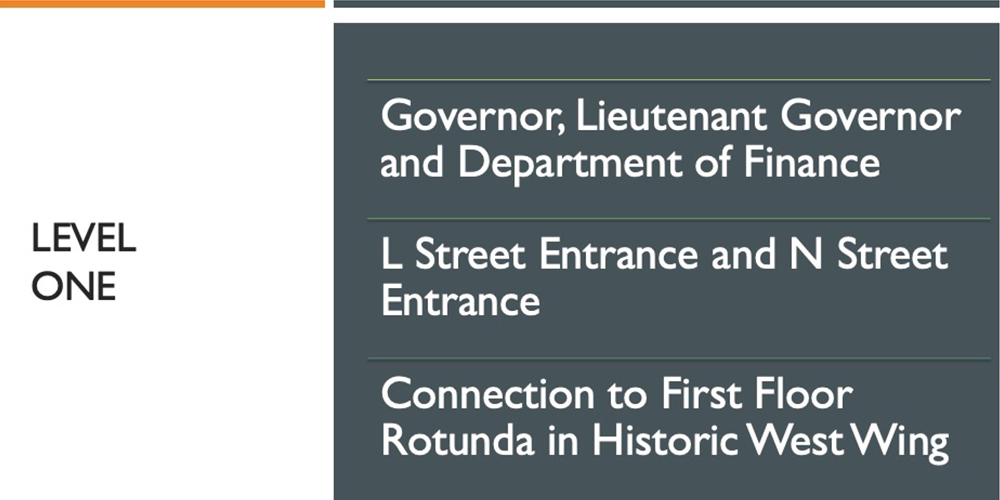
The previous space did not easily allow all Californians to participate in their government. That’s because it did not meet current ADA standards, which may have hindered access for individuals with disabilities. The new building will incorporate principles of Universal Design, allowing the building to be usable to the greatest extent possible by everyone. The previous design did not match the floors between the Annex and the West Wing of the Capitol. Our new Annex will better align floors, making movement between the two buildings easier for everyone.
A main concern for this reconstruction process is safety. The previous Annex was built with materials meant to last only 50 years. Some of that material included asbestos, which can pose a concern to the millions of visitors who enter the building every year. Its outdated design also put people in harm's way when conducting emergency evacuations. By bridging the Annex up to current standards, we can better protect the health and safety of staff, visitors, and legislators alike.
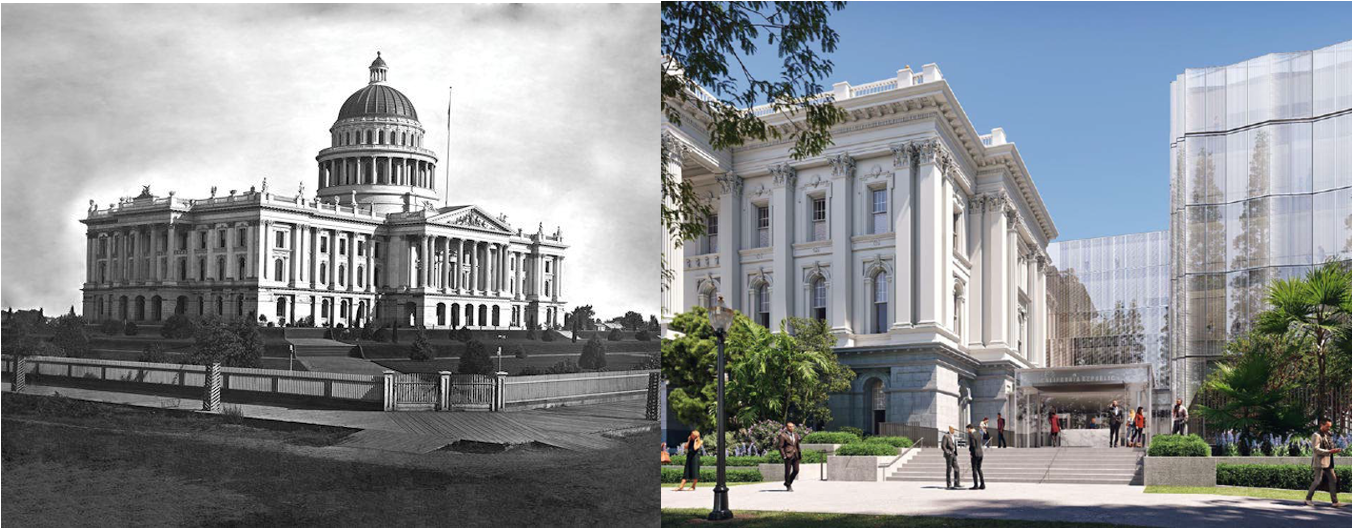
Finally, we want this space to stand as a beacon of modern advancement. Our Capitol should showcase the very best of what technology and innovation can do for our state. Achieving that vision requires investment in systems that may not be visible to the naked eye but are essential to the building’s long-term performance and sustainability. The project is being designed to meet LEED Gold certification and California Title 24 energy-efficiency standards through conservation-focused and environmentally responsible design measures, including a fully electric building and major upgrades to the Capitol’s electrical and mechanical infrastructure. These improvements will support the growing needs of visitors and staff while helping create the most energy-efficient Capitol in the nation.
Our Capitol should be representative of the people, technology, and advancements of the Golden State. We are excited to welcome you to the new People’s House and look forward to opening our doors soon!
Detailed updates on the Annex Project are available in the PDFs below.